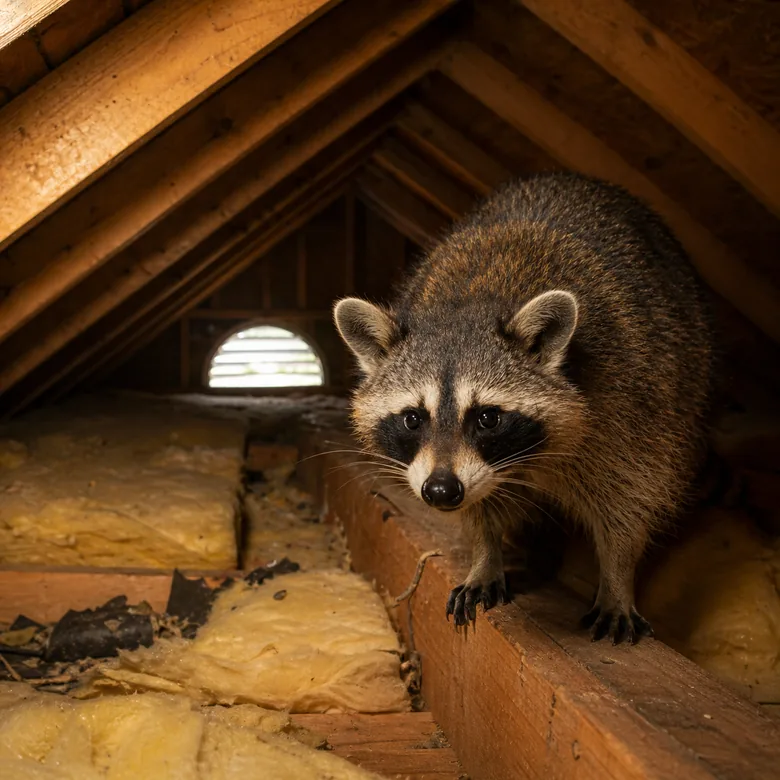
First, do not seal the hole yet
The biggest mistake is closing the entry point before confirming whether animals or babies are still inside. If a raccoon is trapped in the attic, it may cause more damage trying to get out. Solace checks for babies before sealing the final hole and before any warranty goes into effect.
Listen for the timing and location
Heavy walking, thumping, scratching near soffits, or movement around the same entry point can help identify the problem area. Raccoons are often louder than mice or squirrels because they are larger animals.
Look from the ground only
You can check for bent vents, pulled soffits, damaged fascia, dirty rub marks, droppings or insulation around an opening. Avoid climbing onto the roof or reaching into any entry point.
Call for an inspection
Inspections are free within the normal service area. Out-of-service-area leads may incur a fee, but that will be discussed before scheduling. After inspection, Solace provides a written price and contract before work begins.
Need help with this issue?
Solace Wildlife Control provides free inspections in the normal service area and gives a written price and contract before work begins.