Quick answer
Rodent exclusion means identifying likely entry points and sealing or repairing the appropriate openings after the activity and removal plan are understood.
Removal and exclusion are different jobs
Removal addresses the animals currently creating the problem. Exclusion addresses access. A complete plan may involve both, because a home can become active again if the same opening remains available.
The inspection comes first
Before sealing, the technician needs to understand where the evidence is, how the animal may be moving and which exterior openings are plausible. This avoids treating every gap as equally important.
What areas may need exclusion?
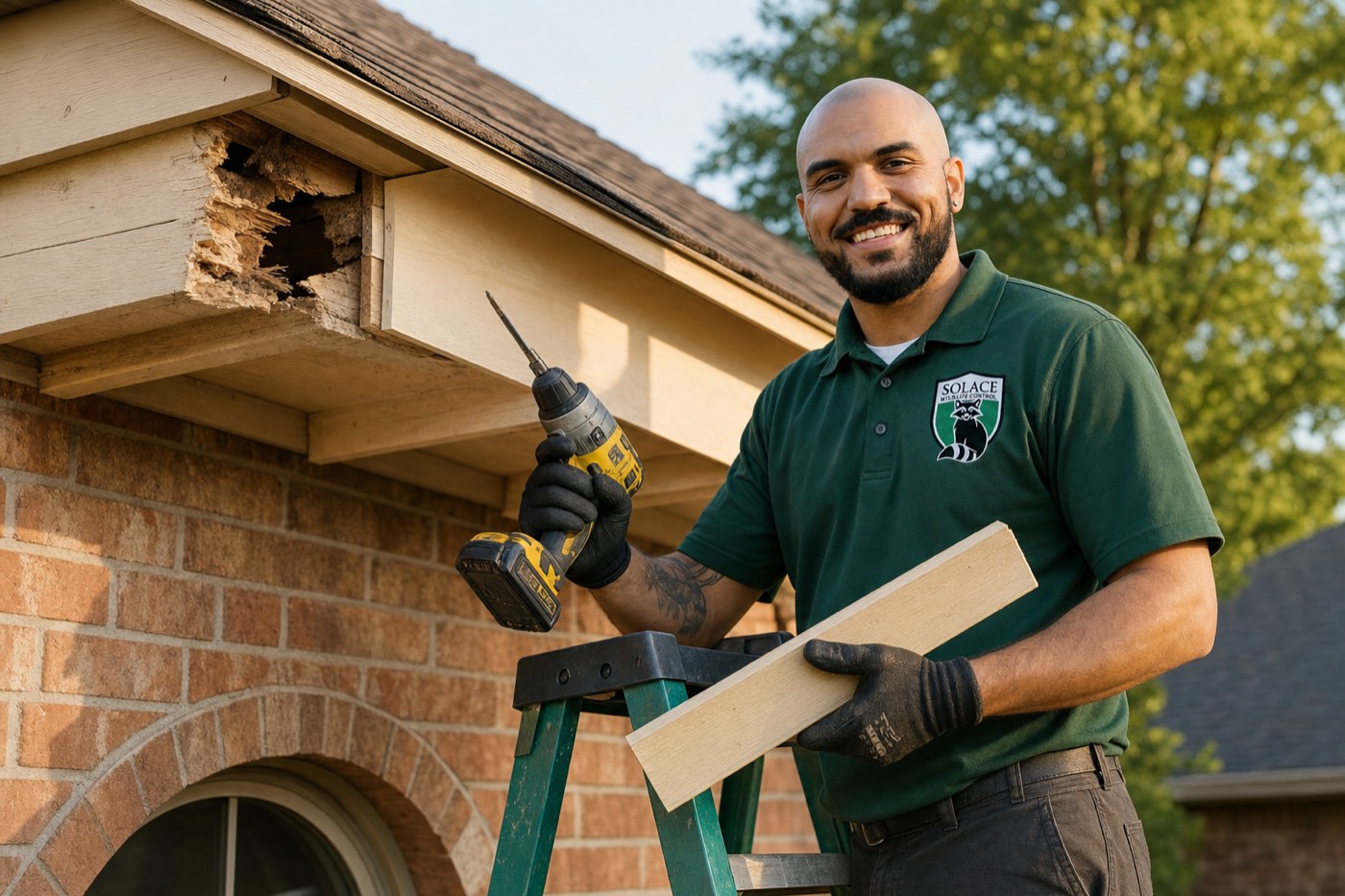
Depending on the property, work can involve door gaps, vent openings, utility penetrations, soffits, fascia, roofline transitions, crawlspace access points or damaged exterior materials.
Why material choice matters
An exclusion repair needs to fit the location and the type of opening. The goal is a durable repair that closes the access route without creating drainage, ventilation or building-function problems.
What happens after exclusion?
Continue watching for fresh droppings, new gnawing or recurring sounds. If new evidence appears, its location can help determine whether another route is active or the original issue was larger than expected.
When to request an inspection
If you are finding repeat signs or do not know where rodents are entering, start with an inspection rather than guessing at repairs. Solace provides rodent removal and exclusion help in the OKC Metro.
Need help with rats or mice?
Solace Wildlife Control provides free inspections in the normal service area and can quote rodent removal, exclusion, repair and sanitation work based on what is found at the property.