Quick answer
Common rodent entry routes include gaps around doors and garages, utility penetrations, damaged vents, foundation transitions and openings where roof or exterior materials meet.
Start where different materials meet
Rodent access is often found at transitions: siding to foundation, roofline to soffit, utility line to wall, or door frame to slab. These edges can develop gaps that are easy to miss from the ground.
Garage doors and side doors
A garage may provide food, stored materials and a sheltered route into adjoining parts of the home. Check the lower corners of doors, worn seals and gaps that remain when the door is closed.
Utility and plumbing penetrations
Pipes, cables, HVAC lines and other penetrations can leave space around the opening. The important detail is not just whether a hole exists, but whether the size, location and evidence suggest it is being used.
Vents, soffits and roofline gaps
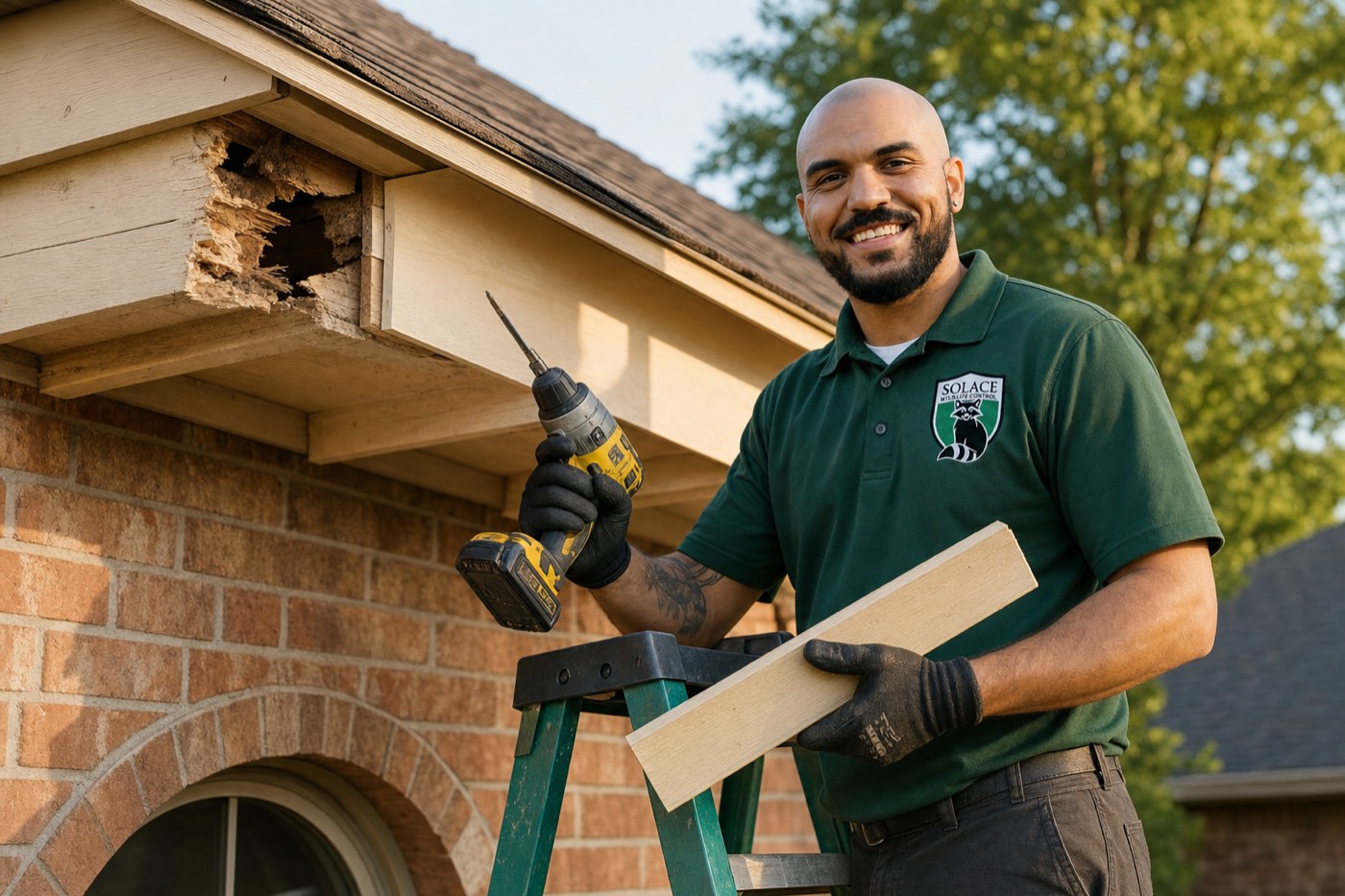
Damaged vent screens, loose materials or gaps at roofline transitions can provide access to attic spaces. Because roof-level activity can also involve squirrels or other wildlife, species identification matters before work begins.
Foundation and crawlspace openings
Low-level gaps can lead directly into crawlspaces or wall cavities. Check foundation vents, access doors and transitions around additions or porches where materials may not meet tightly.
Why exclusion comes after inspection
Sealing random gaps without understanding the active route can leave the main entry untouched or complicate removal. A better sequence is to inspect, identify the activity and access pattern, build the removal plan, then complete the appropriate exclusion or repair work. See how rodent exclusion works.
Need help with rats or mice?
Solace Wildlife Control provides free inspections in the normal service area and can quote rodent removal, exclusion, repair and sanitation work based on what is found at the property.